Tuesday, September 19, 2006

Convulvulus HM...bit like buses!

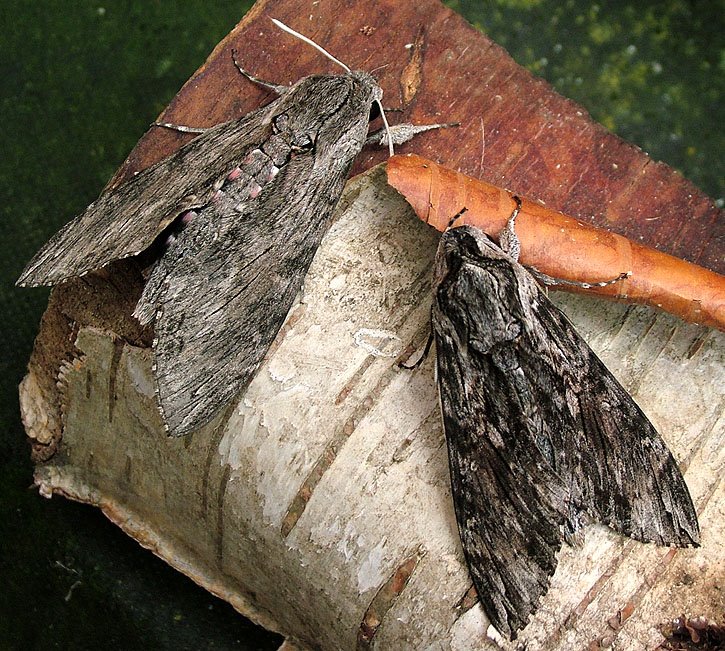
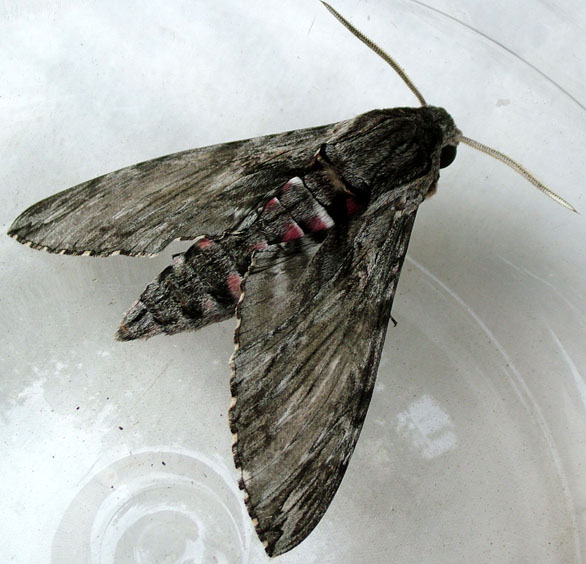
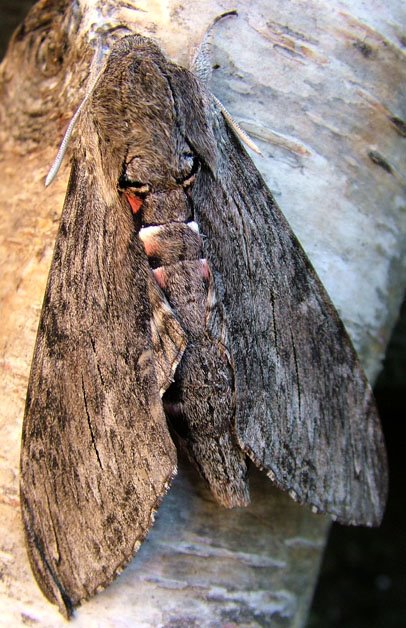
Well wouldn't you know it, you get your first one and then two come along! Another visit by Convolvulus Hawkmoth last night the first was actually onthe washing line post at around midnight when she was duely potted, the second, well he was in the trap this morning, and being a cool start to the day, both were docile enough to be moved without disappearing immediately. Also taken over night was a Pale Mottled Willow (who did disappear immediately!) and a Blair's Shoulder-Knot ( not back pain suffered by a P.M!) GYL 175

Convolvulus Hawkmoth

The females are larger than the malesand the markings are not as heavy.


The smaller, darker male (click for big pic)


Family shot!


Saturday, September 16, 2006

Convolvulusly Brilliant

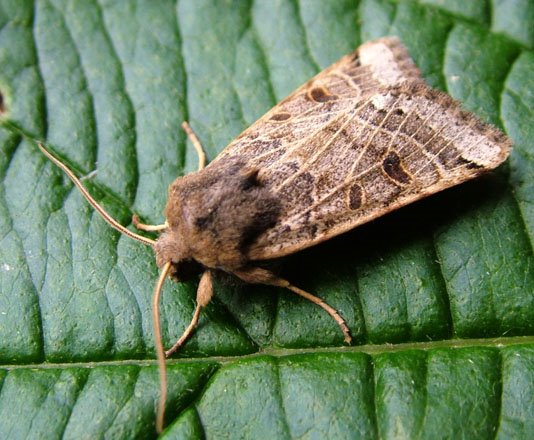
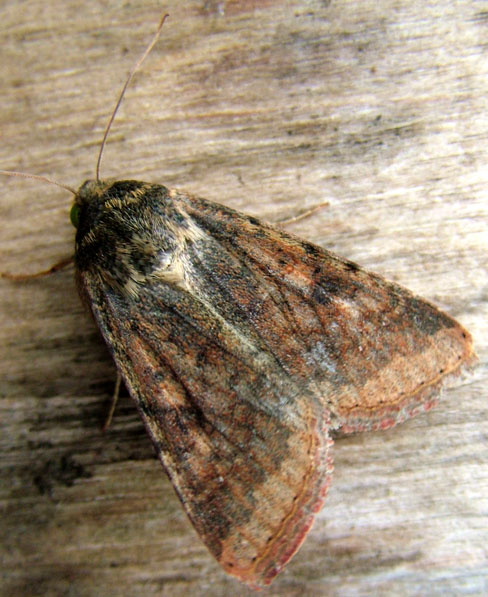
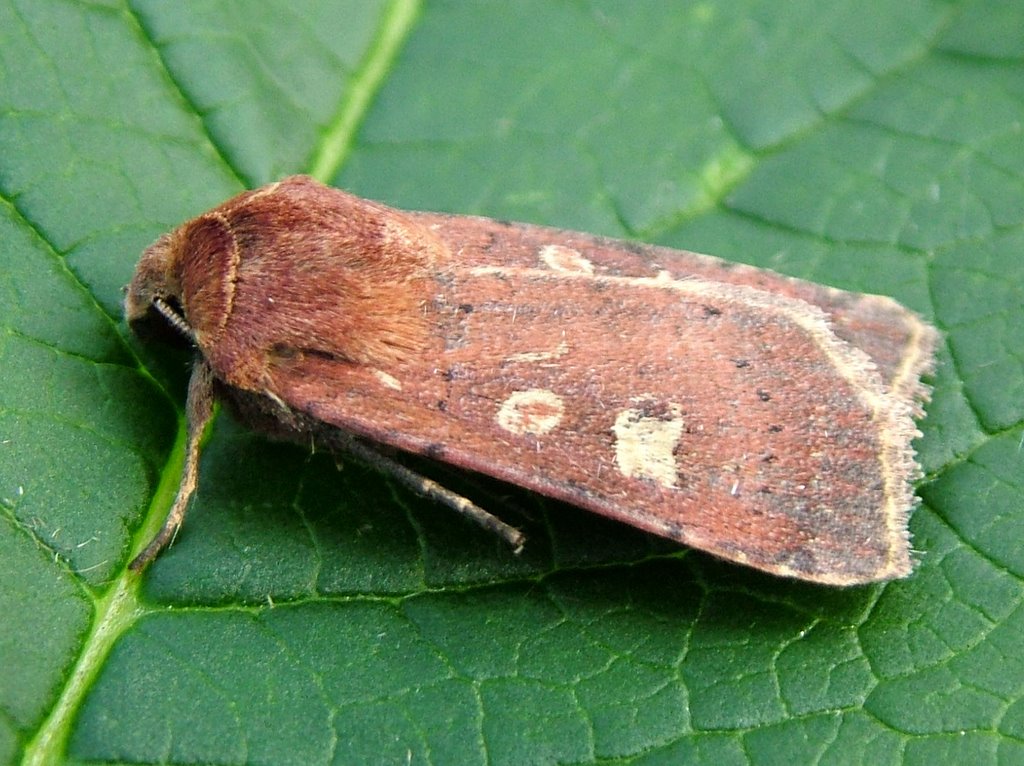
Ran the trap most nights this week with the wind to strong only for one or two nights. Numbers are definitely dropping but as the seasons continue to change, so do the species being caught, so one week is never the same as the previous. New for the year were Beaded Chestnut, Lunar Underwing and Dark Sword-grass, and new for me was an Orange Sallow* , that made its escape as I tried to get a pic.

Beaded Chestnut a very fiently marked individual showing the grey hindwing

Dark Sword-grass


Lunar Underwing


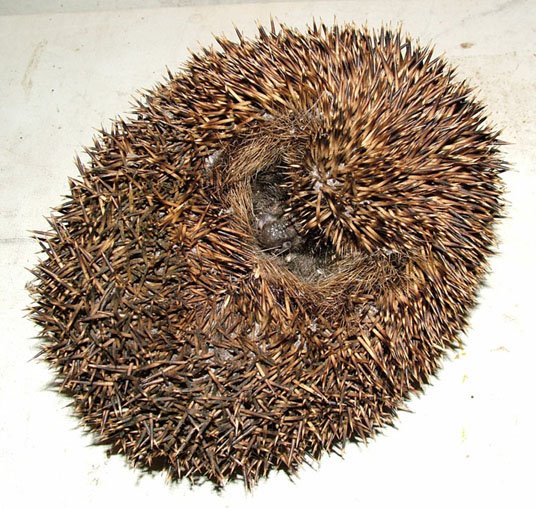
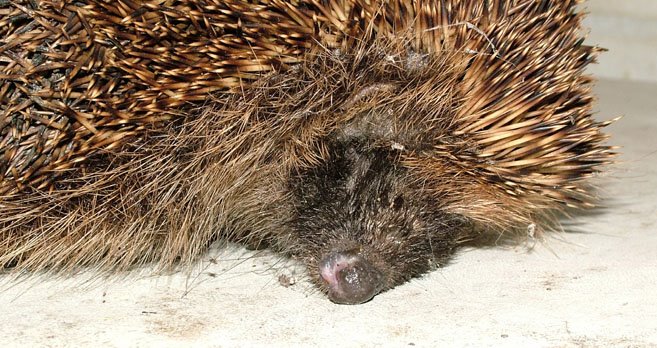
On one night as I stepped out of the door I nearly trod on a Hedgehog that was on the back door step! I nipped up stairs to fetch the camera and when I came back there was my hedgehog, gone! Hearing some scrabbling in the utility shed, there it was trying to get under the boiler! At this point I intervened, donning some gloves, the little thing snorted and grumbled like anything then went into the obligatory ball.

Hedgehog
( 'I like trucking, I like trucking, I like trucking and I like to truck....') target audiance only!

' ...I'm only sleeping'


Highlight of the week however came this morning, as I peered into the moth box, having given it a quick glance before breakfast, and what had obviously been hiding underneath had now moved to the top - a big bruiser of a moth-a Convolvulus Hawkmoth*!!! These moths do not breed in Britain but are an immigrant in varying numbers, but are by no means common. Because of their size, markings and scarcity, along with the Death's-head Hawkmoth, these moths are really prised by those that are luck enough to catch them, like us! GYL 173

Convulvulus Hawkmoth
Sunday, September 10, 2006

Gotcha!

A couple of moth sessions in the early part of the week produced fewer numbers but the new ones just keep coming, this time we had Brown- spot Pinion*, White point*, Pearly Underwing* and Frosted Orange. Towards the end of the week the evening weather became poor for mothing- clear with a bright moon and a fair bit cooler. Macro moth garden year list now stands at 168, I'm hoping to reach 200 by the years end, if I do, its gonna be close!

Brown-spot Pinion


White point


Pearly Underwing


Frosted Orange


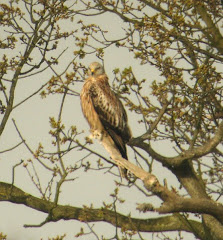
Saturday morning I had to do a little work from home, so with that done I had the scope at the bottom of the garden and was soon rewarded with Common Buzzard, up to 3 Hobby and best of all a Red Kite. The kite drifted in from the west and then just hung about for about half an hour before finally gaining height and moving off. I managed to get a couple of 'record' shots (another way of saying crap!) but was impressed that even at the distance the bird was, had it have been something really rare, the pics would have still shown some detail. The bird I was really hoping for was Honey Buzzard, with this and next weekend really my best hope. I did see my one and only Aylmerton record last September but alas I was out of the garden!

Red Kite...honest!


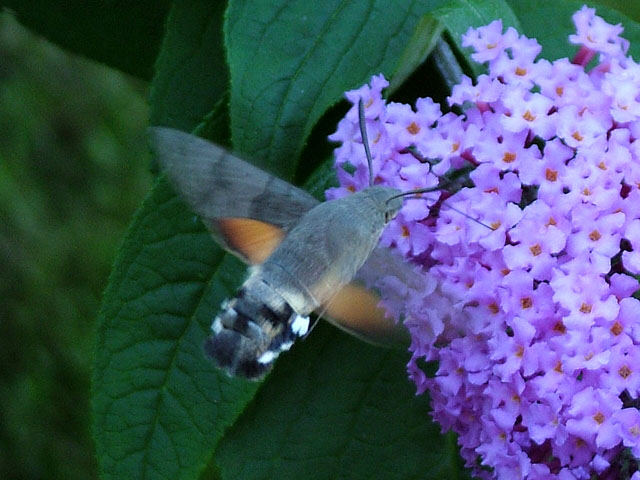
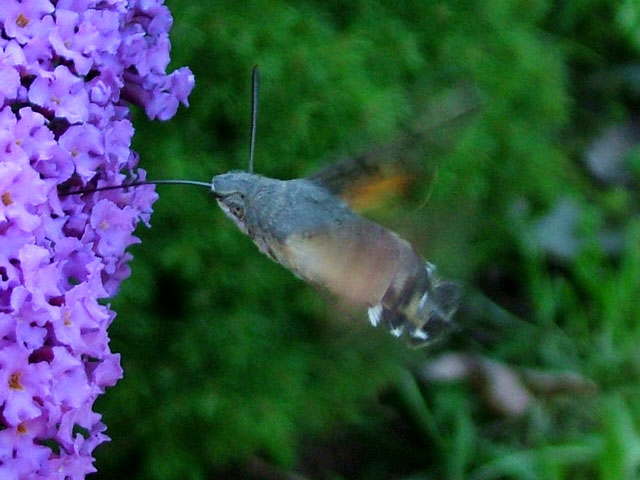
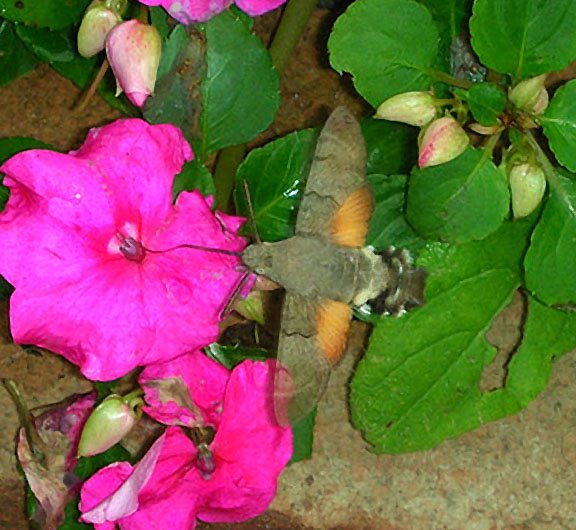
After being visited sporadically throughout the summer by Hummingbird Hawkmoths, with seemingly their only pattern of occurance being that I have not got my camera handy, one was finally drawn to the Buddliah long enough for me to dash up stairs and grab my camera to get a couple of shots. If there is one creature in the animal kingdom that is perfectly named, it's this one!

Hummingbird Hawkmoth


Monday, September 04, 2006

Steve Irwin 1962-2006


Not everybodies cup of tea, this enigmatic Australian, the original Crocodile Hunter died today. Our trip to Australia in the spring had to include a visit to Australia Zoo, Steve's home, for my son, who was thrilled at the prospect of maybe catching a glimpse of his hero. This was Steve Irwin's gift, his 'over the top' enthusiasm and passion for wildlife was lost on most sensible, 'serious' adults, but the kids absolutely loved him! For all his faults and what ever you thought of his methods, for someone to be able to inspire so many youngsters to 'turn on' to wildlife in this day and age, well that would be the type of legacy we would all love too leave. Steve Irwin had an influence on my lads life, and compared with some influences so widely available to kids these days, it was one that I would have willingly encouraged for years to come.

Saturday, September 02, 2006

Marbled Clover

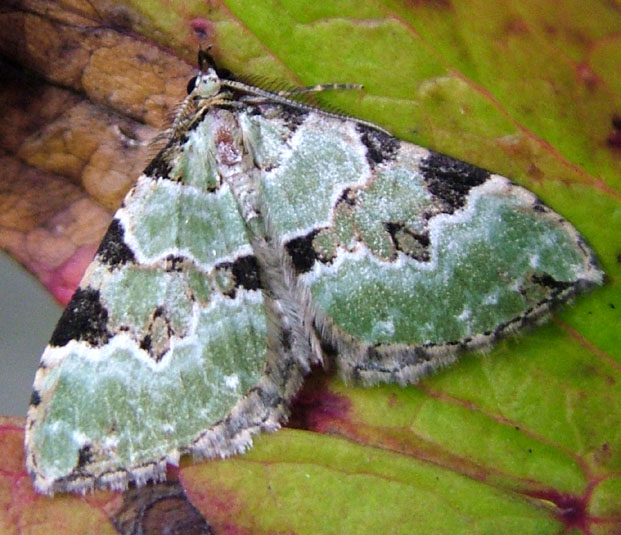
Being Friday, the moth trap was run all night, with an overcast sky and temperatures not dipping too much. This morning there was the usual hatful of Large Yellow Underwings, Setaceous Hebrew Character, plenty of Square-Spot, Small Square-spot, Rosy Rustic Large Broad bordered Yellow Underwing and Smokey Wainscot, 2-3 Green Carpet, Brimstone Moth, Svensson's Copper Underwing, Flame -Shoulder, Lattice Heath, Common Marbled Carpet and Flounced Rustic and singletons of Angle Shades, Light Emerald, Cabbage Moth, Common Rustic and Silver Y. Additionally there was a second (darker) Scarce bordered Straw, and cream of the crop, a Marbled Clover*. Marbled Clover is a Red Data Book species in Britain, meaning that it is only found in less than 15 10km squares in the whole of Britain. Though the breeding population is found mainly in Breckland, they are known to be migratory in europe which would be the more likely origin of this one. Thats the beauty of creatures that fly, they have no boundaries and can end up anywhere, even Aylmerton! GYL 164

Marbled Clover


Scarce Bordered Straw darker than the mid-week individual

Green Carpet


A couple of presumed first year Hobbies were watched over Rounces Covert mid morning, sparring in the air, looking to sharpen their hunting skills and panicking the House Martins at the same time!


Thursday, August 31, 2006

Immigrant in Aylmerton

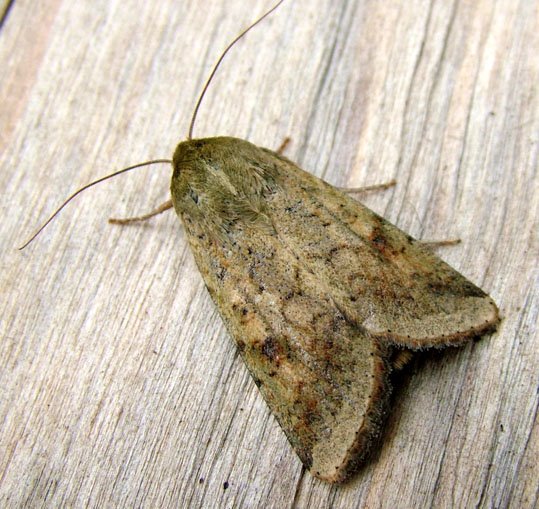
Had the moth trap on for a few hours last night and amongst the many Setaceous Hebrew Characters and the full compliment of Yellow Underwings was this fairly unspectacular but 'different' moth which turned out to be a Scarce Bordered Straw*, an immigrant from southern europe which turns up regularly in small numbers in Britain. Not shown here is the broad dark trailing edge to the hind wing which was quite distinct. GYL 163

Scarce Bordered Straw


Sunday, August 27, 2006

LIFER!

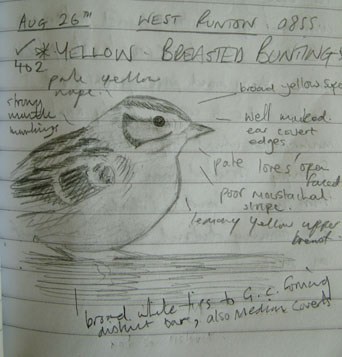
Well, what an eventful morning Saturday turned out to be! I was just walking up towards the Track when I received a phone call from Ian Prentice, another birder who lives in the parish. Ian and I go back yonks, as school kids we 'cut our teeth' together birding the salt marshes and mud flats of south-east Essex and several holidays to North Norfolk. Bizarrely, with very little communication or contact by either of us we have both ended up in the same parish in Norfolk! Anyway I digress, Ian phoned to say that he had what he was 99 percent certain was a Yellow-breasted Bunting in the next village of West Runton, and that he had lost sight of it but was having to leave the site because of another commitment. Knowing how good a birder Ian is I set of immediately, phoning a couple of people en route. As I turned into the cliff top carpark I noted my dad had already managed to get down there and jumping out of my vehicle I could see Ian frantically pointing downwards. A couple of seconds of confusion ensued as I thought he was indicating that the bird had gone on to the cliff face, but moving to a better angle I realized he was pointing to the fence. I scanned the fence directly infront of me and counted 4 Meadow Pipits before a muttered expletive and YELLOW-BREASTED BUNTING!!! As I was taking a mental note of the birds distinguishing features my hand was already reaching for my camera which dangles constantly from the neck of my 'scope ( the bird was sitting on a fence, next to a public footpath, on the Norfolk coast, on a bank holiday Saturday- it wasn't going to be there long!) As I took my eye from the scope to attatch my camera the pipits, with the rare visitor in their midst flew up from the fence and turned west...and just kept going west...and didn't stop. Shortly afterwards other birders started turning up , most resigned to the fact that this one had given them the slip, a feeling I am only too well famliar with.. but for once , not this time!


Back home and the moth trap had lots in it but pretty much the same as in recent catches although there were Latticed Heath and a fine Red Underwing (escaped but I didnt care!) to keep the annual total going GYL 162.

Lattice Heath

Friday, August 25, 2006

Mid week Moths

Managed to run run the trap for a few hours Tuesday this week and added another three species to the garden year list for macro moths (160). Several Square spot- Rustic, a couple of Centre- barred Sallow and a single Twin- spot Wainscot

Square-spot Rustic


Centre-barred Sallow


Twin-spot Wainscot


This summer has certainly been a great one for Hummingbird Hawkmoth ( I saw another while at work today) and have even managed to make it in to the National newspapers (not sure where they get the 3 inch wingspan from though!) but unfortunately when they are in the garden they never appear when I have my camera to hand. However they also appear fairly regularly at my parents house and my mum managed to catch this one on her new go-gadget camera... not bad, not bad at all!
Hummingbird Hawkmoth

Sunday, August 20, 2006

Seen, Sealed, Delivered!

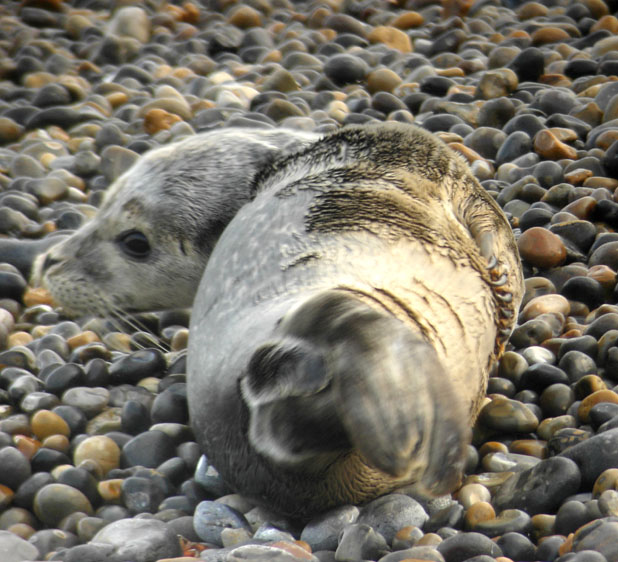
Took a walk down to my coastal patch this morning near Sheringham. With rain fall just before dawn I was hoping for a few grounded migrants but it soon became evident that this was not to be and the birding was disappointing: Guillimot 1 juv offshore, Arctic Skua 1w, Wheatear 1, Willow Warbler 1, Turtle Dove 1w. Whimbrel 3, Curlew 2, Turnstone 1w. Despite the lack of birds and the somewhat overcast conditions I did manage to take a few pics including this young Common Seal that was hauled up on the beach but looking quite healthy.

Common Seal


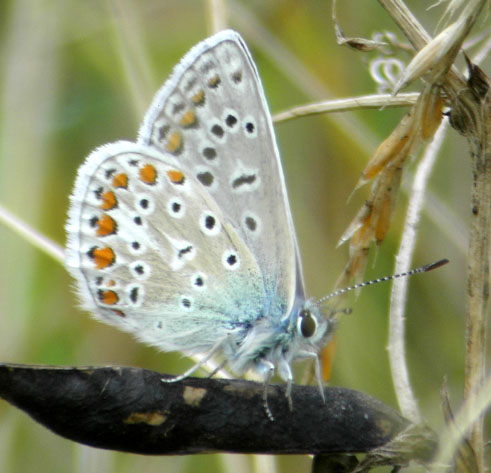
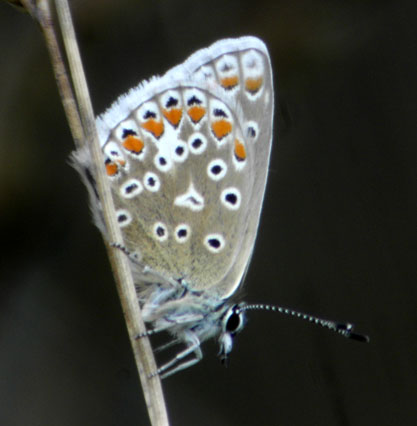
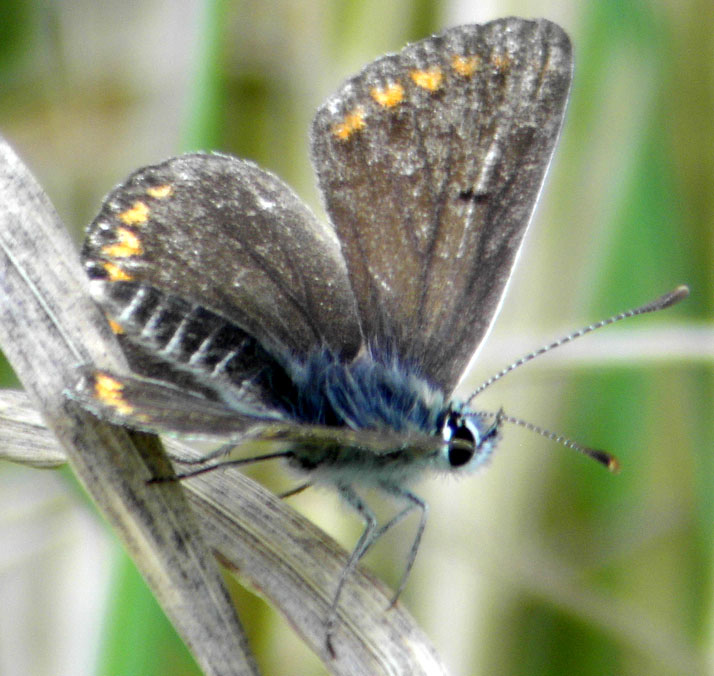
I always struggle to get close to butterflies but this morning I found several well settled in a hedgerow in lea of the wind, no sign of any Camberwell Beauty though, which would have been nice!

Common Blue


Brown Argus


Saturday, August 19, 2006

Saturday

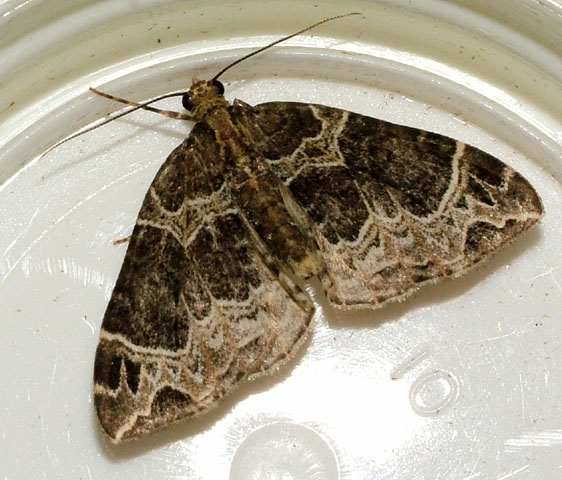
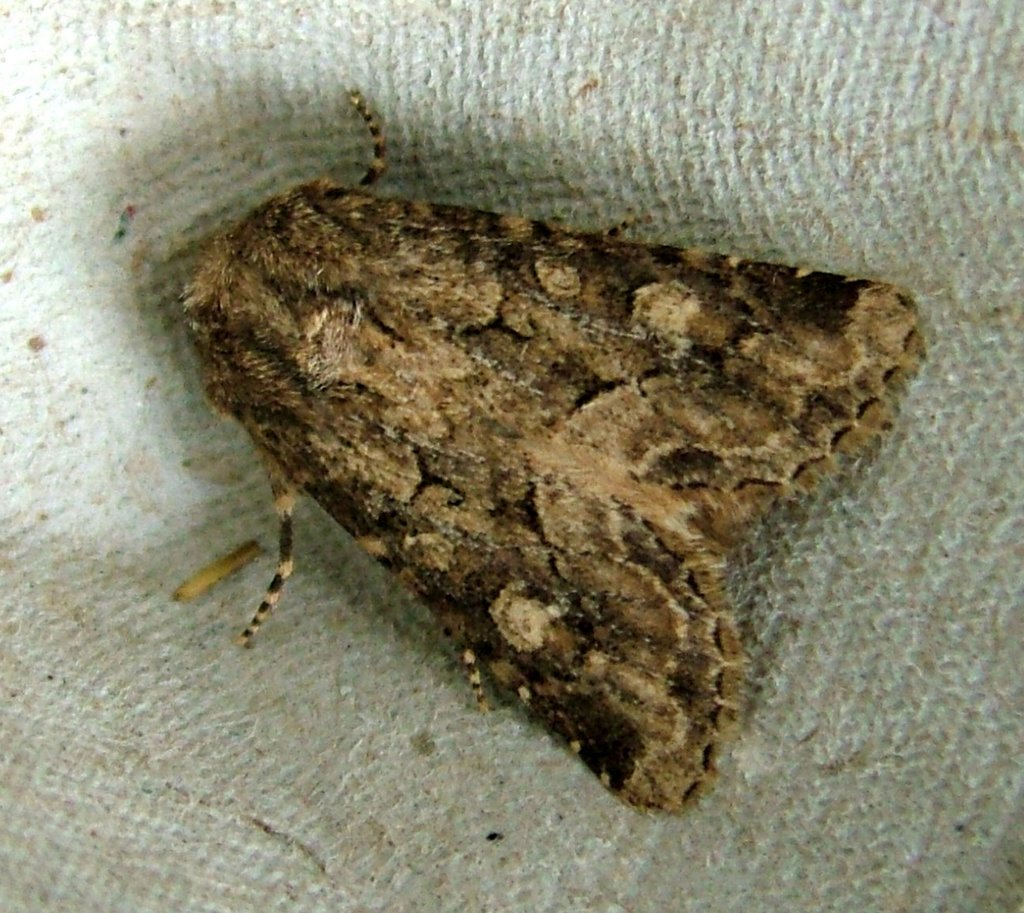
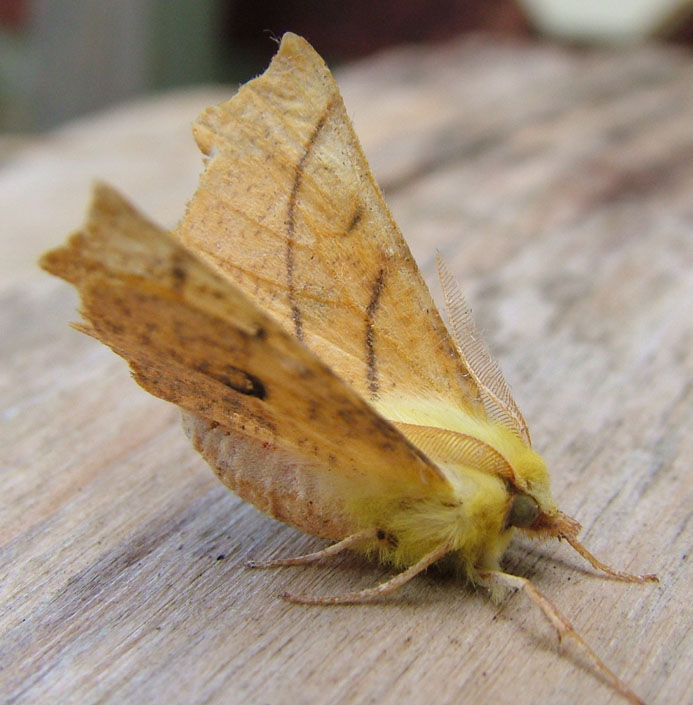
Had the moth trap on all night last night, a fair haul this morning, with the majority being Large Yellow underwings, Flame Shoulders and Setaceous hebrew Character but also small numbers of the following: Gold Spot*1, Six-striped Rustic* 3, Coxcombe Prominent 1, Poplar Hawkmoth1, Orange Swift* 2, Oak Hooktip 2, Rosy Rustic 2, Spectacle 1, Rustic 1, Small Pheonix 1, Straw Dot 5, Bloodvein 1, Common Rustic 2, Mouse Moth 1, Svensson's Copper-underwing 2, Flounced Rustic*1, Canary-shouldered Thorn*2. GYL 157. Not much in way of bird movement from the garden, several Swift still being noted and a Hobby drifted west at lunch time.
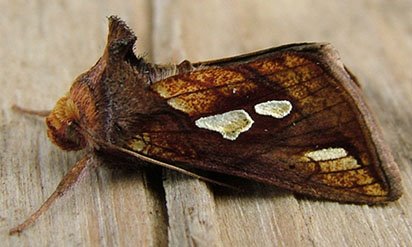
Gold Spot


Flounced Rustic


Canary-shouldered Thorn


Six-striped Rustic

Monday, August 14, 2006

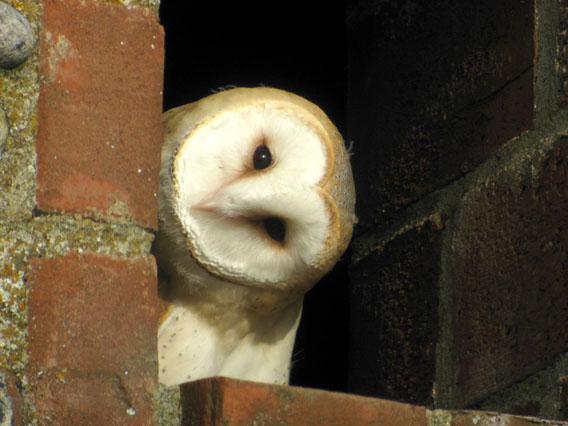
Owl in a Barn

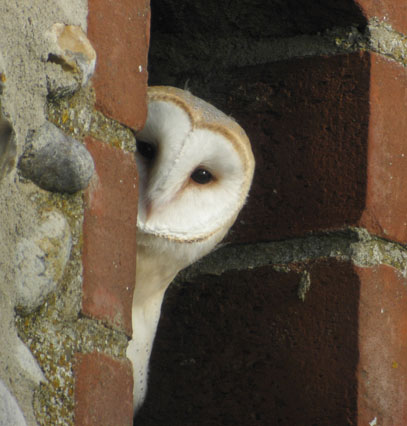
Anyone who has glanced at the winter months of this blog will have not failed to realise that in Norfolk we are blessed by a particularly healthy population of Barn Owls. Now, I find Barn Owls addictively photographic, but this enigmatic youngster seen yesterday was a true star, and came complete with its own barn!
Barn Owl


...the start of a Harry Worth impression maybe ?! (target audiance only!)

'....you can look at it two ways....this way....'


'.....or this way!'


Saturday, August 12, 2006

work,work,work + wet,wet,wet = notta lotta blog!

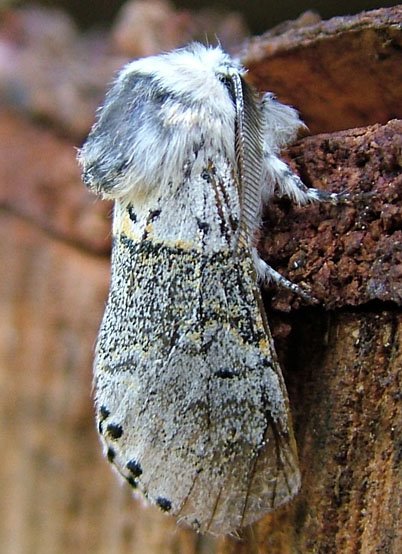
Have finally managed to find some time to update today! Well, over the past fortnight our localised drught has well and truely ended! The rain on some days has been huge and more than once the pond has spilt onto the road (though no goldfish swimming down the street yet!) On the bird front it's still fairly quiet though did manage to jam in on a fly over Green Sandpiper on the 6th GYL 83. The moth trap has been somewhat rested in the wet, and of recent the wind but did manage another addition on the evening of the 5th, a Sallow Kitten*. GYL 151

Sallow Kitten this moth is closely related to the Prominents.


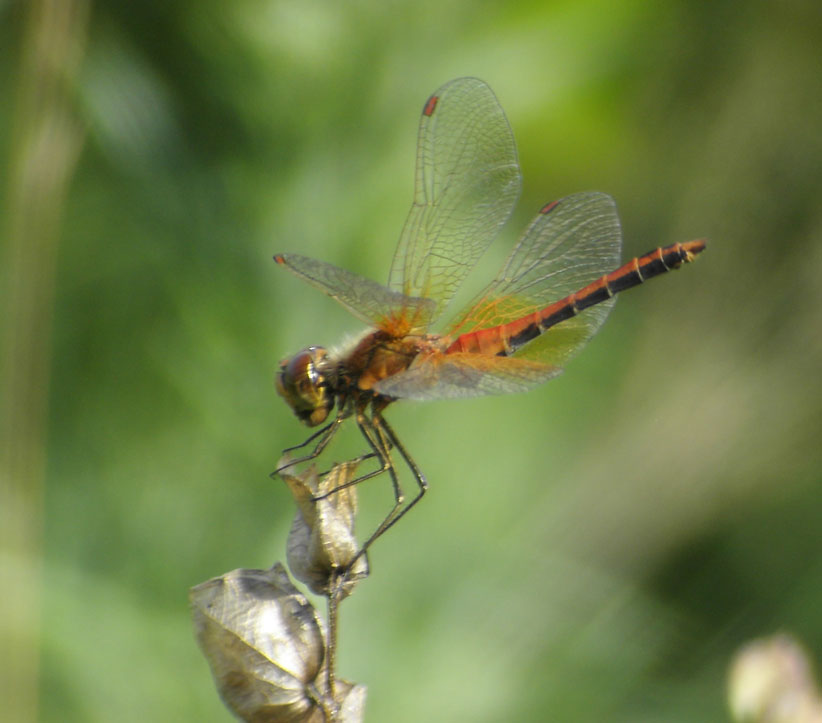
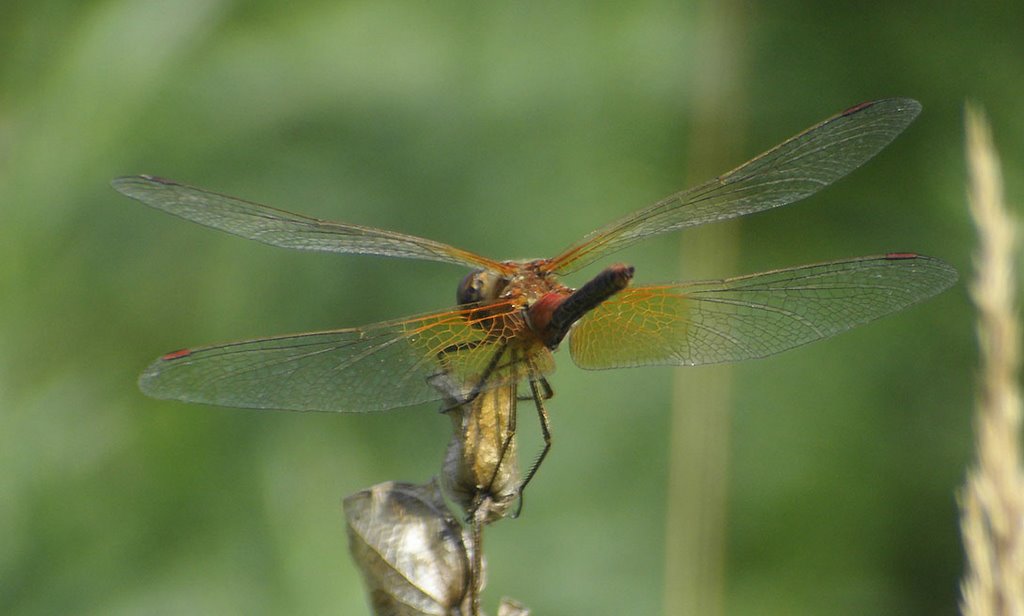
The highlight of the past two weeks was finally catching up with an immigrant dragonfly, the Yellow -winged Darter. These insects from the continent have turned up in small numbers this summer in Norfolk, and I managed to get some shots of this one on Beeston Common, Sheringham.

Yellow-winged Darter showing the 'half and half' coloured abdomon


Yellow-winged Darter showing the delicately marked yellow wings


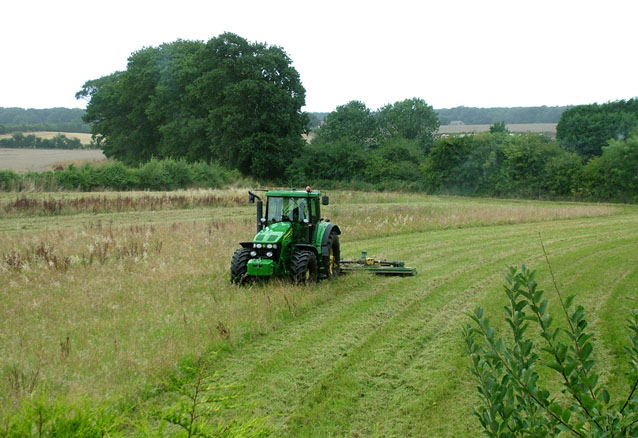
Bringing Aylmerton bang up to date, the set a-side next to us has had its yearly hair cut, it always seems ashame to cut these areas when they're bursting with insects, grasses and weeds but I suppose it does mean that we'll see it all again next year. It's also the annual village fete today although alas, as I write this the first spit of rain is hitting the window...typical!

Set-a-side maintainance

Sunday, July 30, 2006

Old Lady = new moth

Had another mothing session at the coastal site near Sheringham last night, great fun when you're with others sharing the same interest, if not a bizarre sight to those that dont- three grown men in the middle of a wood, huddled around a single light bulb, occationally jumping around with little pots muttering 'Gotcha this time you little b*%^$£^&*!' Anyway everyone got some new species with mine being Small Pheonix and an immigrant Dark Sword-grass.

Small Pheonix


Dark Sword-grass


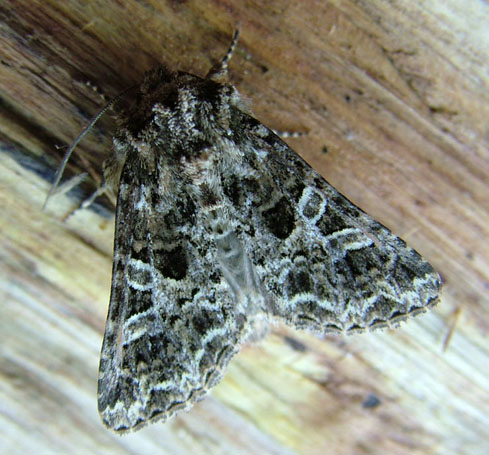
Had quite abit to do around the garden today but did manage our first Marsh Harrier since spring, a dark juvenile quartering the fields to the west. As I was getting some step ladders from the shed I noticed a large , rather distinctive moth roosting on one of the joists, my first sighting of Old Lady (they got some great names these moths!) I have also managed to identify a moth that I caught back in the spring but has aluded me til now, a Lychnis. GYL 150

Old Lady


Lychnis